Build complex toys and simple tools

In-use review -- Panasonic DMC-FZ18 - Part 2

<< Previous  Sep 30, 2007  Next >>
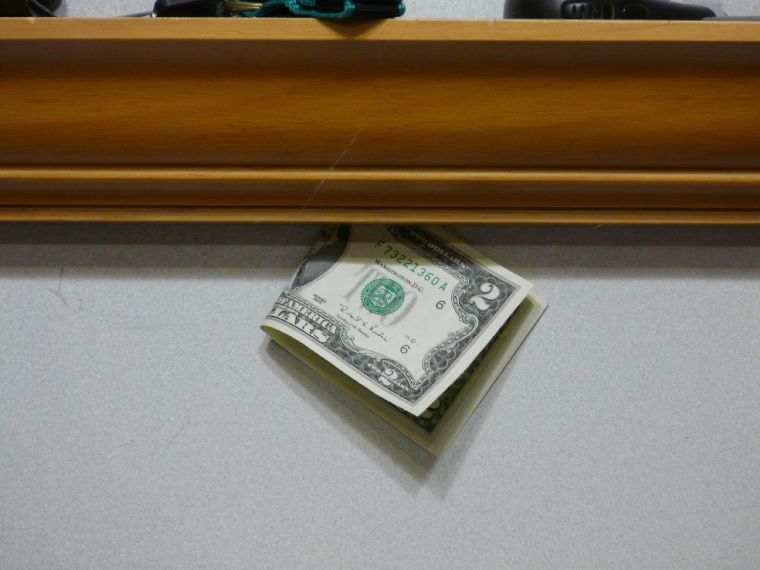
Two dollar bill - by Tony Karp
Using an image-stabilized lens
Panasonic DMC-FZ18. Shot hand-held, 504mm equivalent, 1/10 sec @ F4.2, ISO 200. Uncropped, no post processing.
The Olympus C2100UZ (affectionately referred to as the "UZI") was my first camera that had an image-stabilization system. It was an "optical image stabilizer" that moved one of the elements in the lens to compensate for camera shake. For the previous 45-odd years that I had been taking pictures, shooting hand-held at slow shutter speeds was a test of my ability to act as a human tripod.

The Olympus was an revelation. The 10X zoom range of its Canon lens, along with its optical image stabilizer opened new horizons. I was suddenly shooting portraits at 1/2 second hand-held, and using its 10X to grab telephoto shots under available light conditions.

My next camera, a Sony DSC-F707 didn't have this feature, but its bulk helped in holding it steady and its many other features (like NightShot) more than made up for this lack. My next camera, a Minolta A2 had a new type of image stabilizer. Instead of being built into the lens, as with the Olympus, it moved the image sensor itself to compensate for camera movement. This didn't work as well as the optical stabilizer in the Olympus. I've used several of the Sony H-series cameras, which have optical stabilizers, but they weren't very effective.
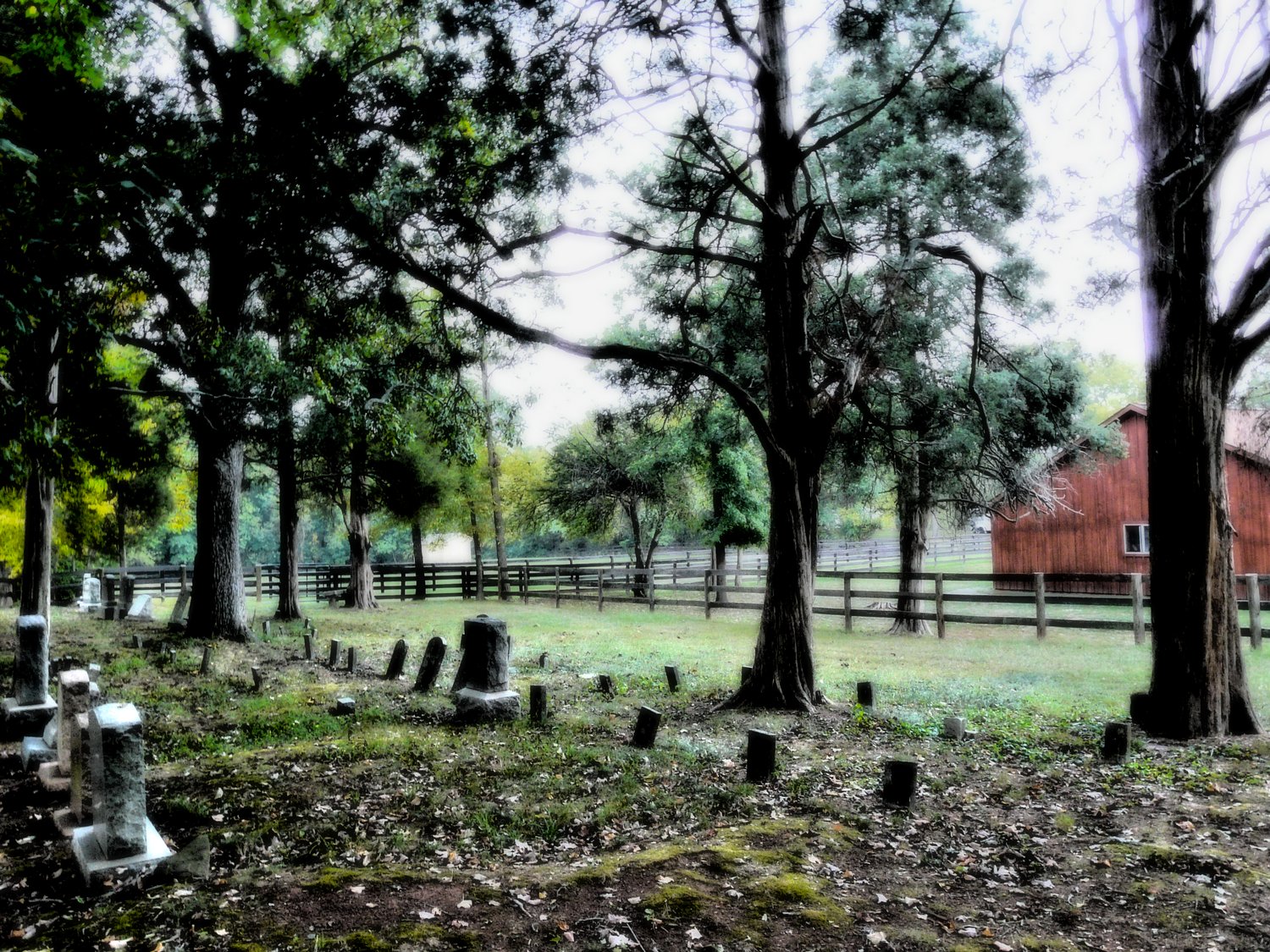
Cemetery on our road - by Tony Karp
Cemetery on our road
Shot hand-held, 28mm equivalent, 1/3 sec @ F4.5, ISO 200. Post processed in LightZone 3.
The DMC-FZ5 was my first Panasonic camera. Tiny, 12 ounces in weight, razor-sharp 12X Leica-designed lens, and an optical image stabilizer that restored my faith in technology. It soon became my favorite camera, the one I carried when I absolutely had to come back with a picture. I was especially impressed with its build quality, solid doors for the battery/SD card and for the USB connector that closed with a reassuring snap.

Panasonic followed this up with several new cameras in this series (FZ7, FZ8), but they didn't seem like a worthwhile upgrade, offering the same lens as the earlier model, and a few incremental features.

Then came the DMC-FZ18, with a new lens, featuring the first wide angle in this series. I'm happy to say that the FZ18's image stabilizer looks like it works even better than the earlier model. This is especially welcome, given the greater reach of its 18X lens.
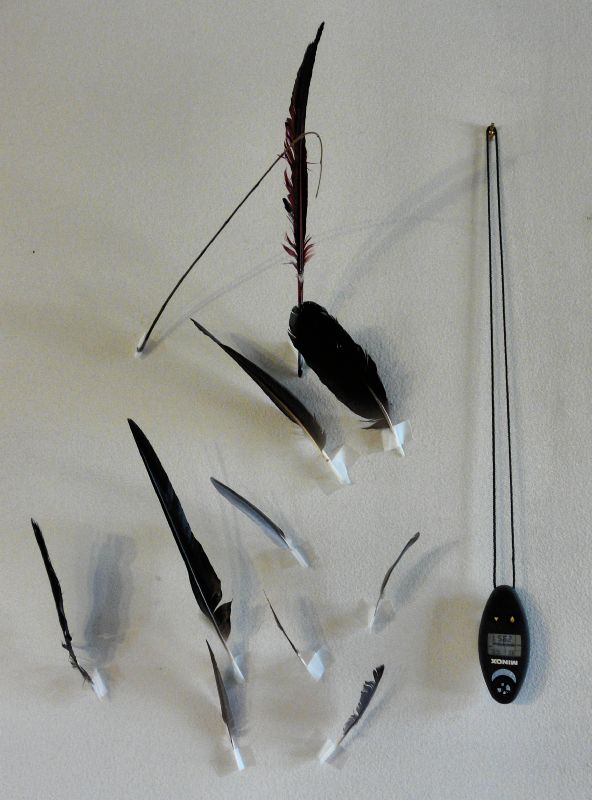
Wall feathers #2 - by Tony Karp
Wall feathers #2
Panasonic DMC-FZ18. Shot hand-held, 28mm equivalent, 1/8 sec @ F4.0, ISO 200. Some post processing in Paintshop Pro X2.
The image stabilization system in the Panasonic cameras can operate in two different modes. As is always the case with photography, there are tradeoffs with either mode.

In Mode 1, the stabilizer is always on, which can hold the image in the viewfinder steadier while composing a shot at the longest telephoto focal lengths.

In Mode 2, the stabilizer is only on when the shutter button is pressed and has a stronger stabilizing effect.

Which one to use? Try 'em both and see which works best for you.

Additional note: although the Panasonic DMC-FZ18 allows you to set the mode for the image stabilizer in P (Program), A (Aperture-Preferred), S (Shutter Preferred), and M (Manual) modes, other settings of the mode dial on top of the camera may force the stabilizer to mode 1. These are simplified settings and the designers probably felt that new users would be more comfortable see less movement in the viewfinder.
<< Previous  Sep 30, 2007  Next >>
Copyright 1958-2008 Tony & Marilyn Karp
Our Art Museum
Web Site Design
Systems Design
The Future
About
About Tony Karp   -  
Recent Entries
Noiseography -- A new photographic technique
Shooting infrared with the Panasonic DMC-FZ28
You're never too young
One month with the Panasonic DMC-FZ28
A trip to Berryville - Panasonic DMC-FZ28
It's the Hobbitt's birthday
On September 11th
Shooting Tri-X with the Panasonic DMC-FZ28
A shot in the dark - Panasonic DMC-FZ28
Sunset and the far-up lens -- Panasonic DMC-FZ18
Further musings on the Panasonic DMC-FZ28
Customizing your camera for high-ISO photography
Panasonic DMC-FZ28 vs DMC-FZ18 at high ISO
Some musings about the Panasonic DMC-FZ28
Hummers, SUVs, DSLRs, and my DMC-FZ28
Panasonic DMC-FZ28 -- At the Flying Circus
Panasonic DMC-FZ28 -- The journey begins
Farewell, my Panasonic DMC-FZ18
More about the settings for the DMC-FZ18
Dealing with the modes and settings of the DMC-FZ18
Photography becomes art - Bird on a wire
The artist's muse at sunset -- DMC-FZ18
Do you need fancy equipment?
Now here's my plan
Good cookie, bad cookie
But seriously, folks...
Post-processing Mr. Squirrel
A museum of one's own
We need new words to describe what's happening
Going over to the dark side
Shooting the moon
Happy Anniversary, Hobbitt
The view from my window - DMC-FZ18
My favorite museum
A toast to the artist's muse
The DMC-FZ18, a sunset, and a glass of beer
Remembering Herbert Keppler
Shooting abstracts with the Panasonic DMC-FZ18
Fixing a Panasonic DMC-FZ18 problem
More pictures from my Panasonic DMC-FZ18
The journey of a thousand Melvins
Stairway to the stars -- Extreme post processing
DMC-FZ18 - Raw vs JPEG - The JPEG Manifesto
Chromatic aberration and the DMC-FZ18
Raw vs JPEG, the DMC-FZ18, and a mystery
Some pictures from my Kodak P880 - Part 2
Some pictures from my Panasonic DMC-FZ18
Some pictures from my Kodak P880 - Part 1
DMC-FZ18 - Don't be afraid of the dark
Shooting in "Medium" - DMC-FZ18 - The right exposure
Shooting in "Medium" and the Panasonic DMC-FZ18
In-use review -- Panasonic DMC-FZ18 - Part 2
In-use review -- Panasonic DMC-FZ18 - Part 1
Photography becomes art - Fantasy at Ida Lee
Photography becomes art - The chefs at Little Washington
My new old camera - the Kodak Easyshare P880
Photography becomes art - Variations on a theme
Doing the impossible - Part 4 - The final result
Doing the impossible - Part 3 - The solutions
Doing the impossible - Part 2 - The challenges
Doing the impossible - Part 1 - The Godfather
All the (art) news that's fit to print
The museum becomes art - #1
Photography becomes art - Making an angel
Some theories about the Sony DSC-H9
How to test a camera
Hitting the wall
Extreme post-processing - Working with infrared
Everything old is new again
Some further thoughts on the Sony DSC-H9
Farewell, my DSC-H9 - a mini review
Learning to live with the Sony DSC-H9
Possibilities
Some thoughts about cameras - The Sony DSC-H9
Blogging 2.0 - A new interface
A funny thing happened on my way to the blog
In the beginning...