|
Build complex toys and simple tools
|
|||
|
|||
|
Getting the right exposure is the oldest problem in photography and although modern auto-exposure systems bring you a lot closer, there are still lots of situations where they fail. In these cases, modern digital cameras offer some secret weapons that can save the day. These tools are the LCD finder or Electronic viewfinder, and spot metering -- the ability to measure the exposure for just a small part of the image.Most point-and-shoot digital cameras have both of these, while the DSLRs have only the spot metering. These examples were shot with my Panasonic DMC-FZ28, which has both.The first step is to learn to understand and interpret what you see in the camera's viewfinder. If there is any auto-gain setting for the viewfinder, as there is on the FZ28, make sure that you find it and turn it off. It will give misleading results. If your camera has an electronic viewfinder, use this instead of the LCD on the back of the camera, especially when outdoors. Then find where in your camera's menu system you can set the exposure to spot metering. When you do this, some cameras put a little cross in the center of the frame to show where the metering system is aimed.One last thing. Look at the controls on your camera and see if there is a button to lock the exposure and/or the focus. If there is, make sure that it is set so that it locks the exposure. On the FZ28, this button is on the back of the camera and it's marked AF/AE LOCK. Now we're ready to proceed.Here's our first example. While strolling through Washington DC, I saw this picturesque streetlight with a tree behind it. Let's try the tools built into the digital camera and see how they can help.
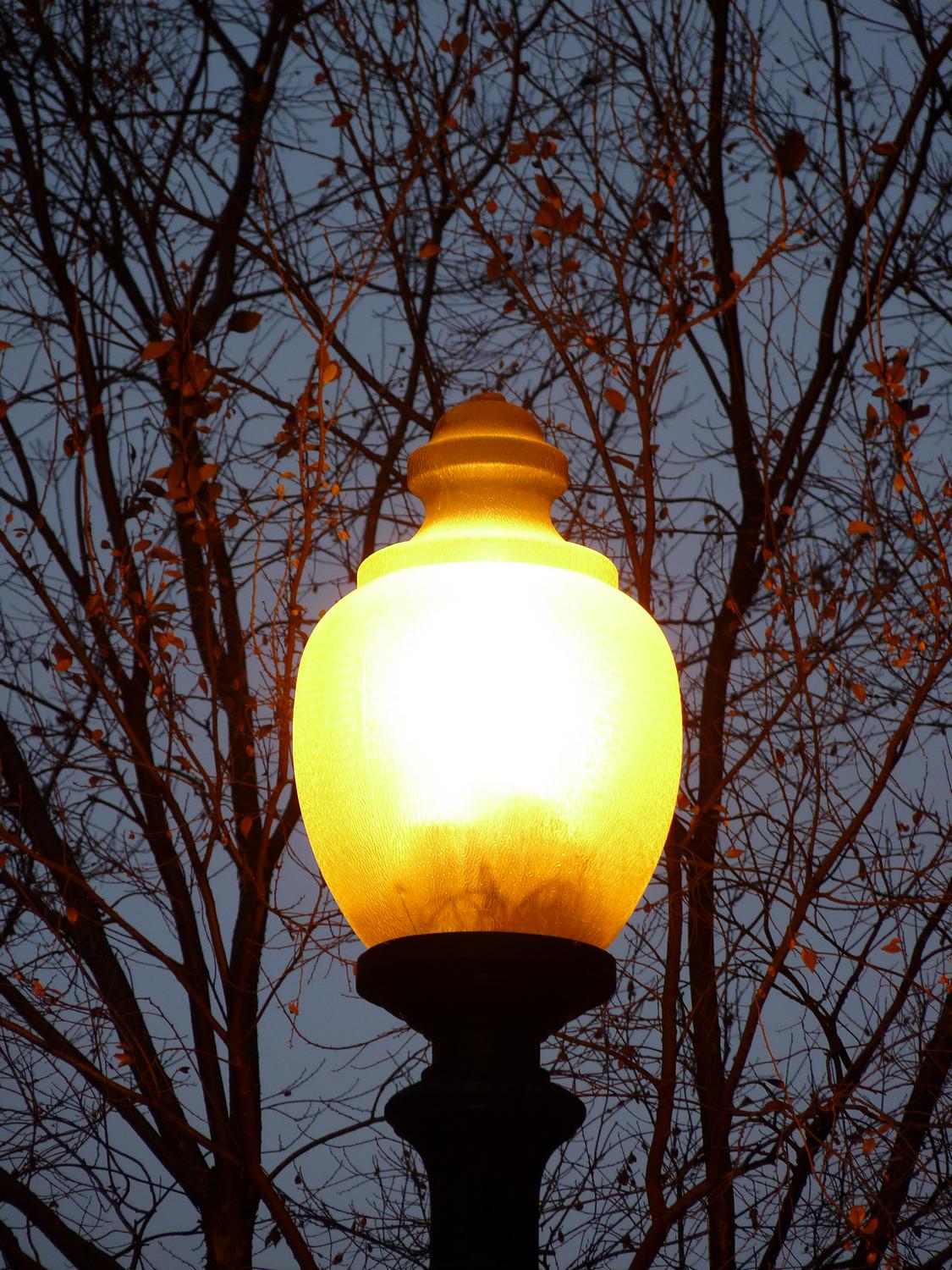
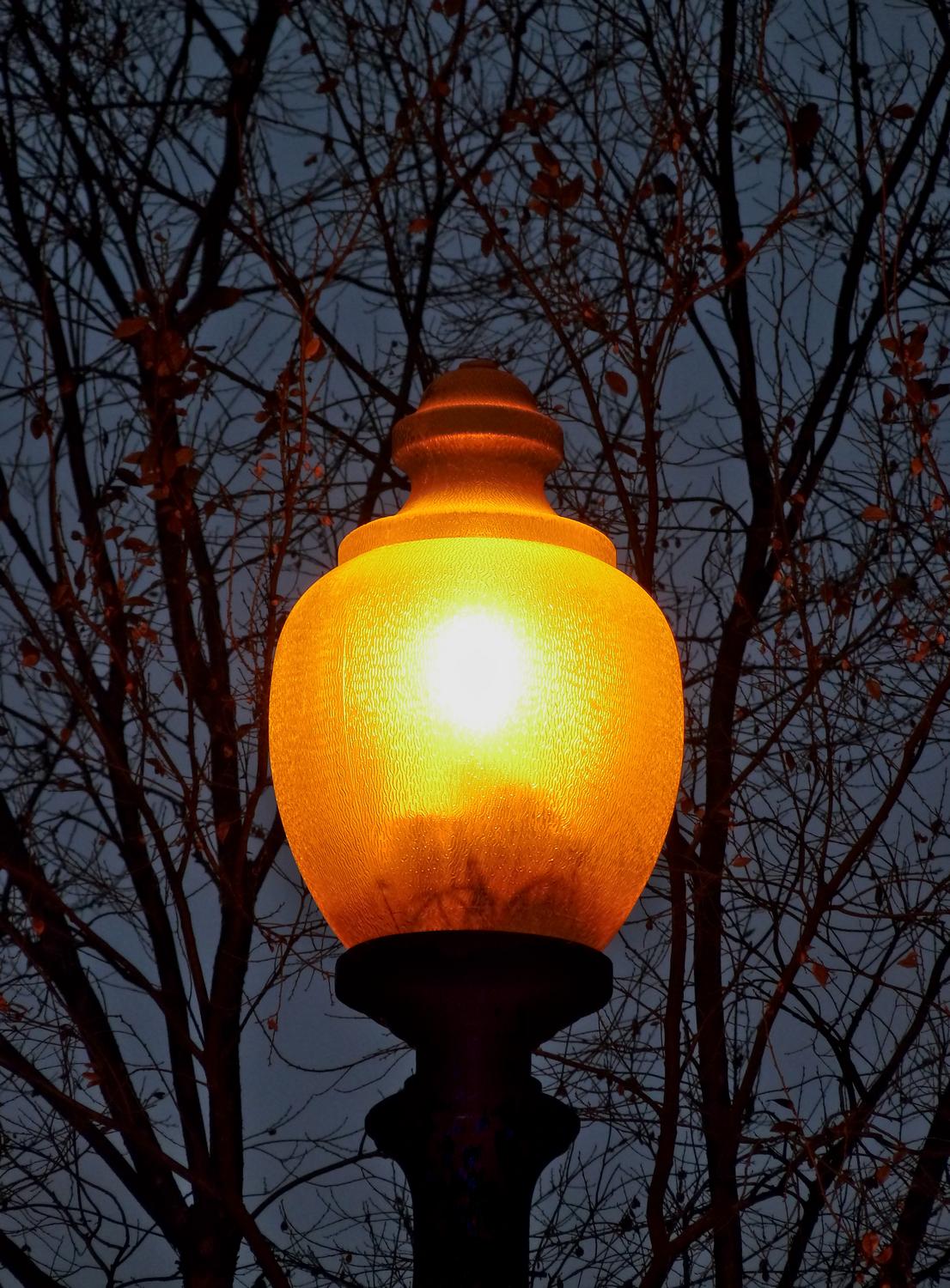
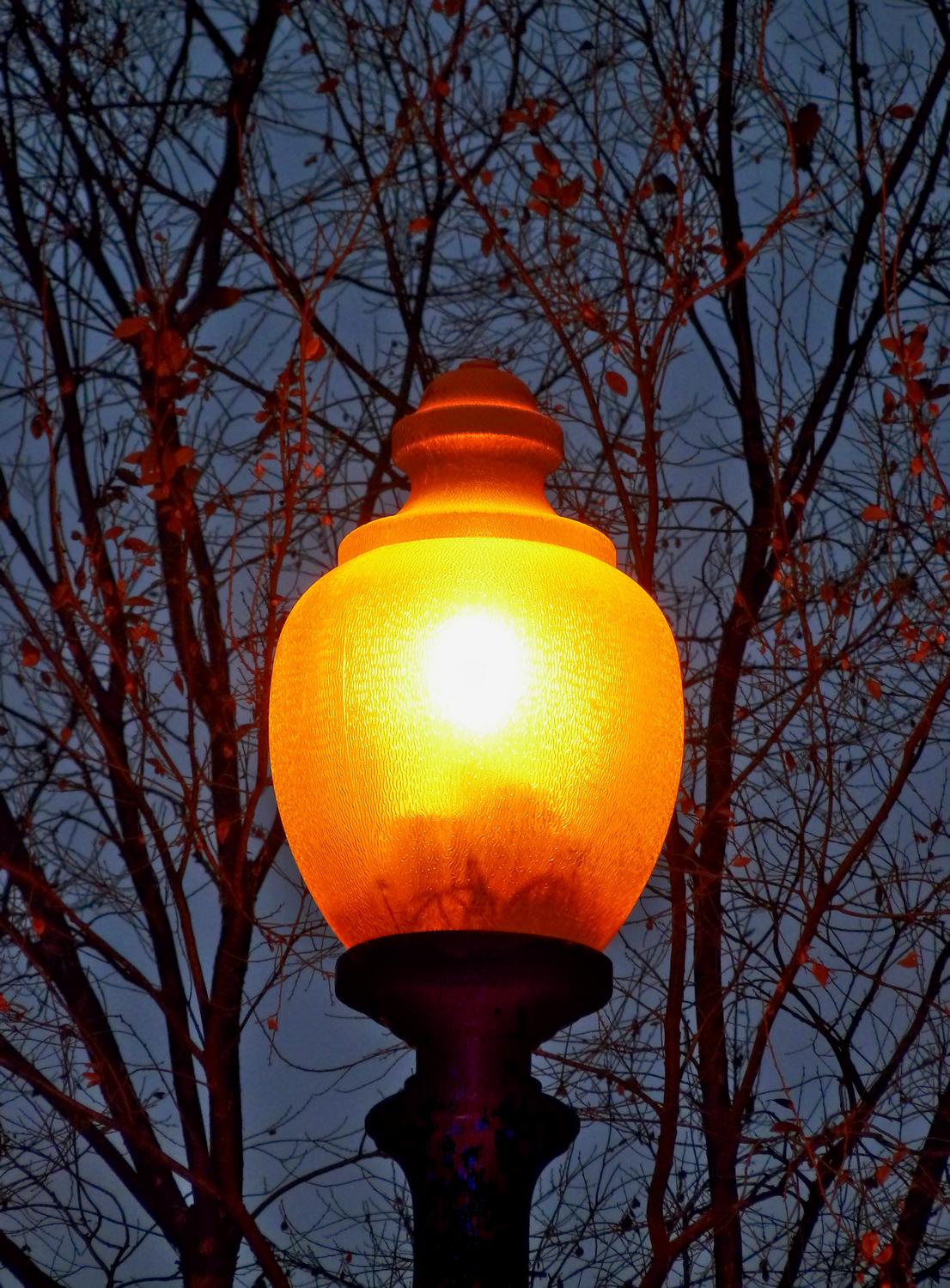
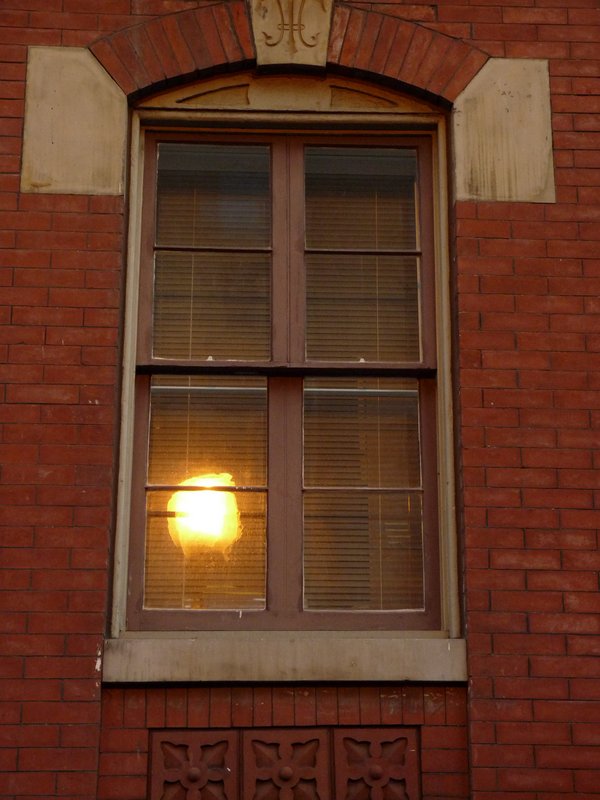
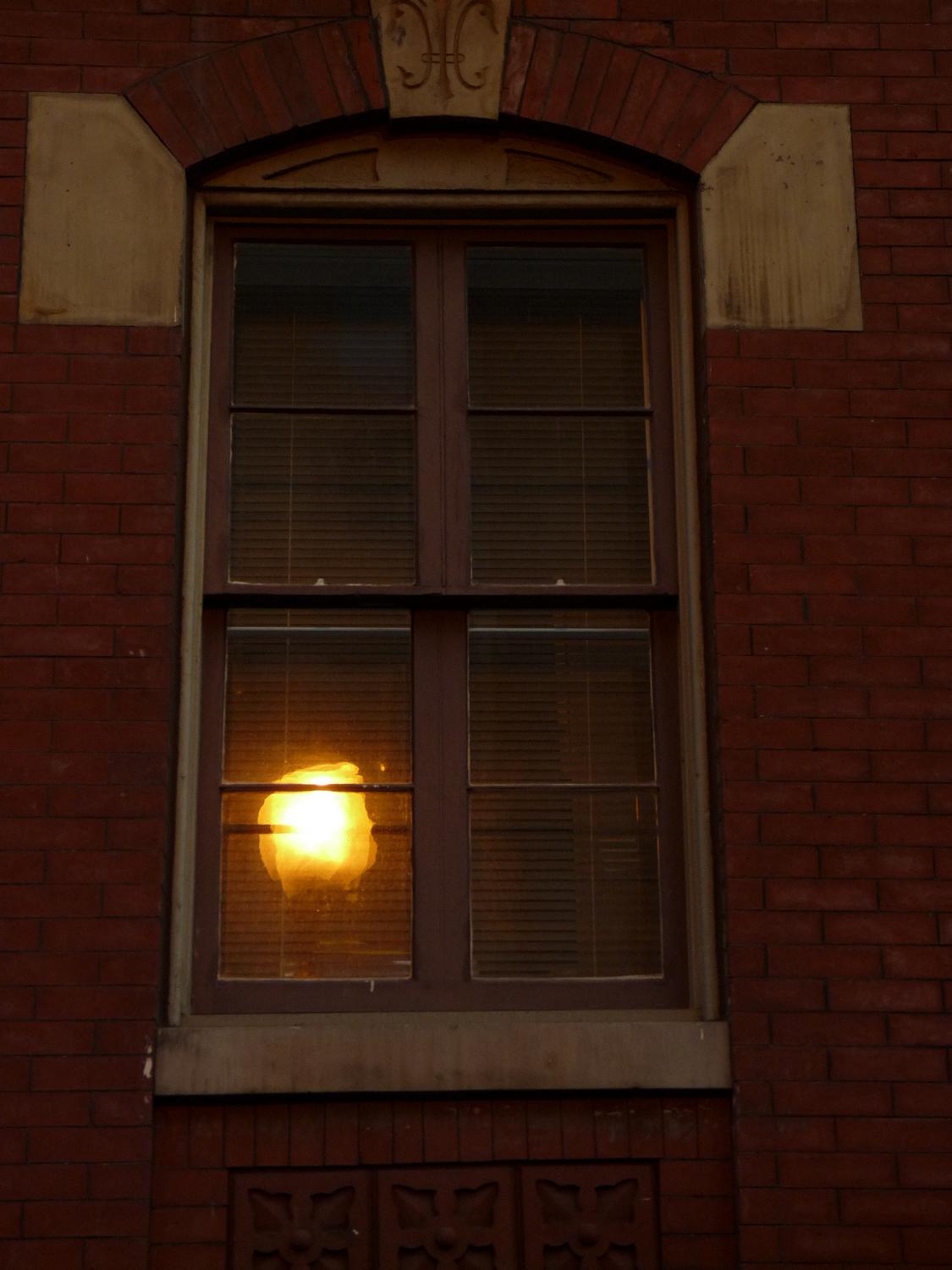
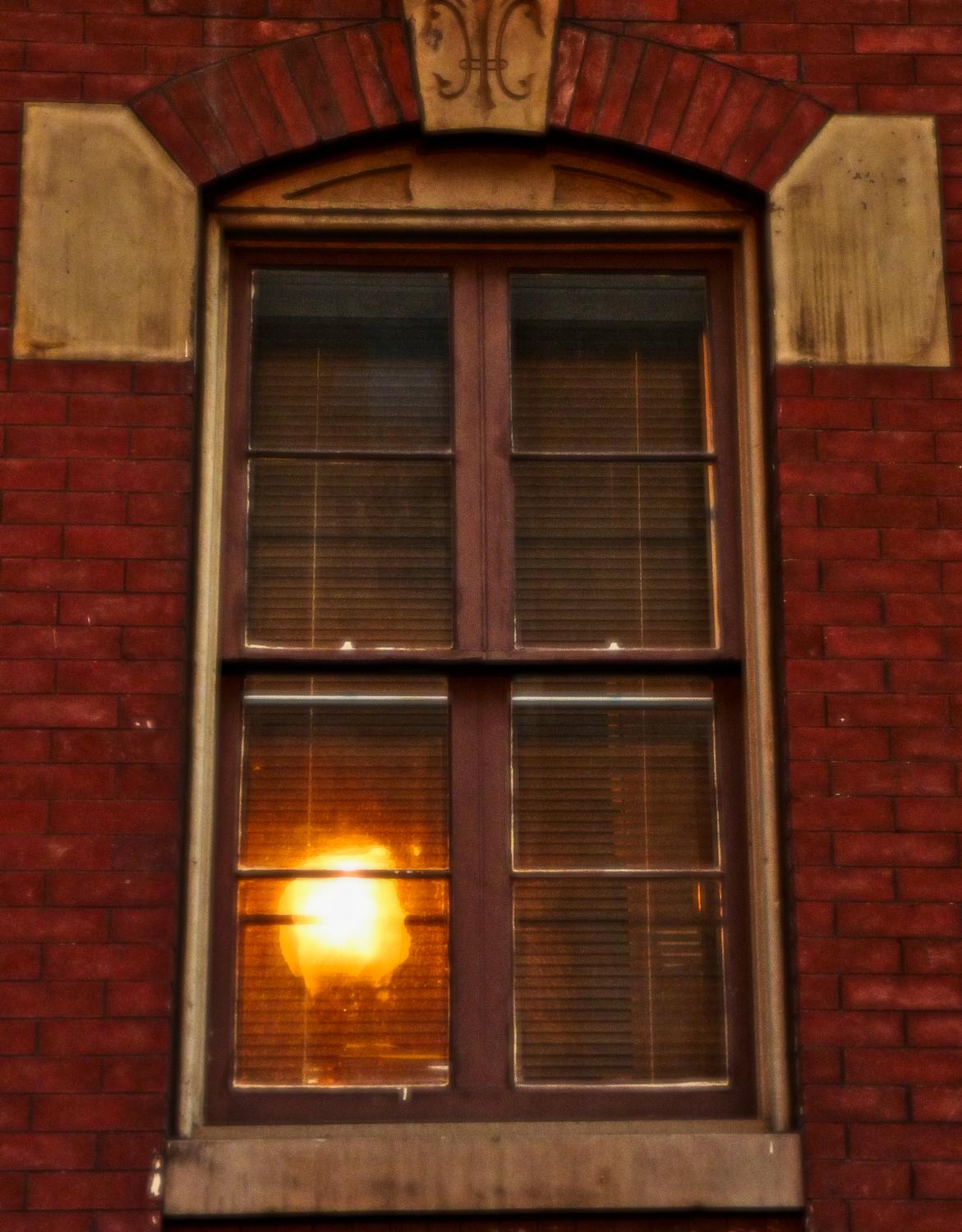
![]() Here's the first try, with the metering set to average out the whole frame. While this works well for most situations, it fails here. The tree in the background looks fine, but the detail in the lamp is burned out. People who shoot raw will tell you that if I had shot raw instead of JPEG, I would have been able to recover the detail from the highlights. This is fantasy. The correct answer is to use the right exposure setting. ![]() The correct way to handle this is to expose for the highlights -- the center of the street light. Set the metering for spot metering. On the FZ28, you'll see a little cross in the center of the frame that shows where the exposure is being measured.Point this at the center of the lamp and you should see most of the frame go dark, while detail begins to show up in the brighter areas. You can move the camera around until the lighting in the scene looks right in the camera's viewfinder. Now press the exposure lock button to hold the setting while you frame the image for the most pleasing view.And don't worry about the dark background. We'll fix this later in the computer. ![]() Here, LightZone 3, with its "Relight" tool is used to open the shadows and bring out detail in the trees behind the streetlight. ![]() After final tweaks in LightZone, using the Hue/Saturation tool, there's more detail in the tree behind the streetlight. If necessary, you can add a mask so the streetlight isn't affected while working on the background. ![]() Another quick example. Here the streetlight is reflected in a window. With the camera's metering set to measure the entire image, the window is fine, but the reflection is burned out. ![]() With the camera set to spot metering, the center of the image is first pointed to the reflection of the streetlight. The exposure is locked using the lock button on the back of the camera. While the camera holds this exposure, it's time to reframe the image to show the whole window. The reflection looks about right now, but the rest of the scene is very dark. ![]() Using the Relight tool in in LightZone, the shadows are brought up to show more detail. Final tweaking involved rotating the image slightly to straighten it, cropping to center the window, and adding a little haze for a dream-like quality.
Copyright 1958-2012 Tony & Marilyn Karp
|
Our new Bookstore!!
Our Art Museum
Visit the Techno-Impressionist Museum
The Artist's Muse Our art books The Artist's Journal Techno-Impressionist Museum Annex Web Site Design
Systems Design
Art and the Zen of System Design
Document Image Retrieval System Bill of Rights Computer System Show Environment Control System The Future
About
Recent Entries
Some thoughts on the Panasonic DMC-FZ150 - Part 2
The Panasonic DMC-FZ150 - A cure for DSLR envy? Some thoughts about my Panasonic DMC-FZ150 - Part 1 The Panasonic DMC-FZ150 -- Best camera ever? Sunglasses - What can you add to a picture? Hey, camera makers. If my smartphone can do this… The Artmuse Variations - a look inside my new book A tribute to George Washington on Veterans Day A visit to the White House The little farmhouse, the tractor, and the interesting tree Buckminster, the baby buckeye butterfly Memories of September 11 Happy Corporation Day! A trip to Monterey and San Francisco The first battle of the American Civil War -- 150 years ago The end of an era -- The last American manned mission Growing an Italian stone pine tree Random thoughts on art and other stuff - From my new book Playing with a classic - Sony DSC-R1 - Part 3, Warrenton Playing with a classic - Sony DSC-R1 - Part 2, In the house Playing with a classic - Sony DSC-R1 - Part 1, Winter Some recent pictures Fixing a Panasonic DMC-FZ18/FZ28/FZ35 problem Into the world of shadows Snowbound! A walk through Warrenton Partly moony with my Panasonic DMC-FZ35 My new Panasonic DMC-FZ35 - Part 3 - Video Some pictures from my Panasonic DMC-FZ35 - Part 2 Happy birthday to muse... Pixels and parking lots -- The Panasonic FZ35 Some pictures from my Panasonic DMC-FZ35 My new Panasonic DMC-FZ35 - Part 2 My new Panasonic DMC-FZ35 - Part 1 On our way to Warrenton Evolution of an Iris A new feature in Adobe Camera Raw 5.4 A tribute to the Apollo 11 astronauts The pole dancer - Variations on a theme Restoring lost highlight detail in JPEG images A short course in photography in ten easy lessons Kodachrome memories A walk in the woods on my birthday Mythbusters - More raw vs JPEG myths Restoring lost shadow detail in JPEG images Action!! Expose for the highlights, develop for the shadows Something new -- Interchangeable cameras Honey, I shrunk the newspaper - The "Nano" NY Times Mistaking evolution for revolution Some pictures from the artist's muse Photography becomes art -- Daibutsu Buddha at Kamakura Happy House-i-versary 25 random things about the artist's muse It happened at the Met Some pictures and some settings - Part 4 - DMC-FZ28 Some pictures and some settings - Part 3 - DMC-FZ28 Some pictures and some settings - Part 2 - DMC-FZ28 Some pictures and some settings - Panasonic DMC-FZ28 Noiseography -- A new photographic technique Shooting infrared with the Panasonic DMC-FZ28 You're never too young One month with the Panasonic DMC-FZ28 A trip to Berryville - Panasonic DMC-FZ28 It's the Hobbitt's birthday On September 11th Shooting Tri-X with the Panasonic DMC-FZ28 A shot in the dark - Panasonic DMC-FZ28 Sunset and the far-up lens -- Panasonic DMC-FZ18 Further musings on the Panasonic DMC-FZ28 Customizing your camera for high-ISO photography Panasonic DMC-FZ28 vs DMC-FZ18 at high ISO Some musings about the Panasonic DMC-FZ28 Hummers, SUVs, DSLRs, and my DMC-FZ28 Panasonic DMC-FZ28 -- At the Flying Circus Panasonic DMC-FZ28 -- The journey begins Farewell, my Panasonic DMC-FZ18 More about the settings for the DMC-FZ18 Dealing with the modes and settings of the DMC-FZ18 Photography becomes art - Bird on a wire The artist's muse at sunset -- DMC-FZ18 Do you need fancy equipment? Now here's my plan Good cookie, bad cookie But seriously, folks... Post-processing Mr. Squirrel A museum of one's own We need new words to describe what's happening Going over to the dark side Shooting the moon Happy Anniversary, Hobbitt The view from my window - DMC-FZ18 My favorite museum A toast to the artist's muse The DMC-FZ18, a sunset, and a glass of beer Remembering Herbert Keppler Shooting abstracts with the Panasonic DMC-FZ18 Fixing a Panasonic DMC-FZ18 problem More pictures from my Panasonic DMC-FZ18 The journey of a thousand Melvins Stairway to the stars -- Extreme post processing DMC-FZ18 - Raw vs JPEG - The JPEG Manifesto Chromatic aberration and the DMC-FZ18 Raw vs JPEG, the DMC-FZ18, and a mystery Some pictures from my Kodak P880 - Part 2 Some pictures from my Panasonic DMC-FZ18 Some pictures from my Kodak P880 - Part 1 DMC-FZ18 - Don't be afraid of the dark Shooting in "Medium" - DMC-FZ18 - The right exposure Shooting in "Medium" and the Panasonic DMC-FZ18 In-use review -- Panasonic DMC-FZ18 - Part 2 In-use review -- Panasonic DMC-FZ18 - Part 1 Photography becomes art - Fantasy at Ida Lee Photography becomes art - The chefs at Little Washington My new old camera - the Kodak Easyshare P880 Photography becomes art - Variations on a theme Doing the impossible - Part 4 - The final result Doing the impossible - Part 3 - The solutions Doing the impossible - Part 2 - The challenges Doing the impossible - Part 1 - The Godfather All the (art) news that's fit to print The museum becomes art - #1 Photography becomes art - Making an angel Some theories about the Sony DSC-H9 How to test a camera Hitting the wall Extreme post-processing - Working with infrared Everything old is new again Some further thoughts on the Sony DSC-H9 Farewell, my DSC-H9 - a mini review Learning to live with the Sony DSC-H9 Possibilities Some thoughts about cameras - The Sony DSC-H9 Blogging 2.0 - A new interface A funny thing happened on my way to the blog In the beginning... |
||