|
Build complex toys and simple tools
|
|||
|
|||
![]()
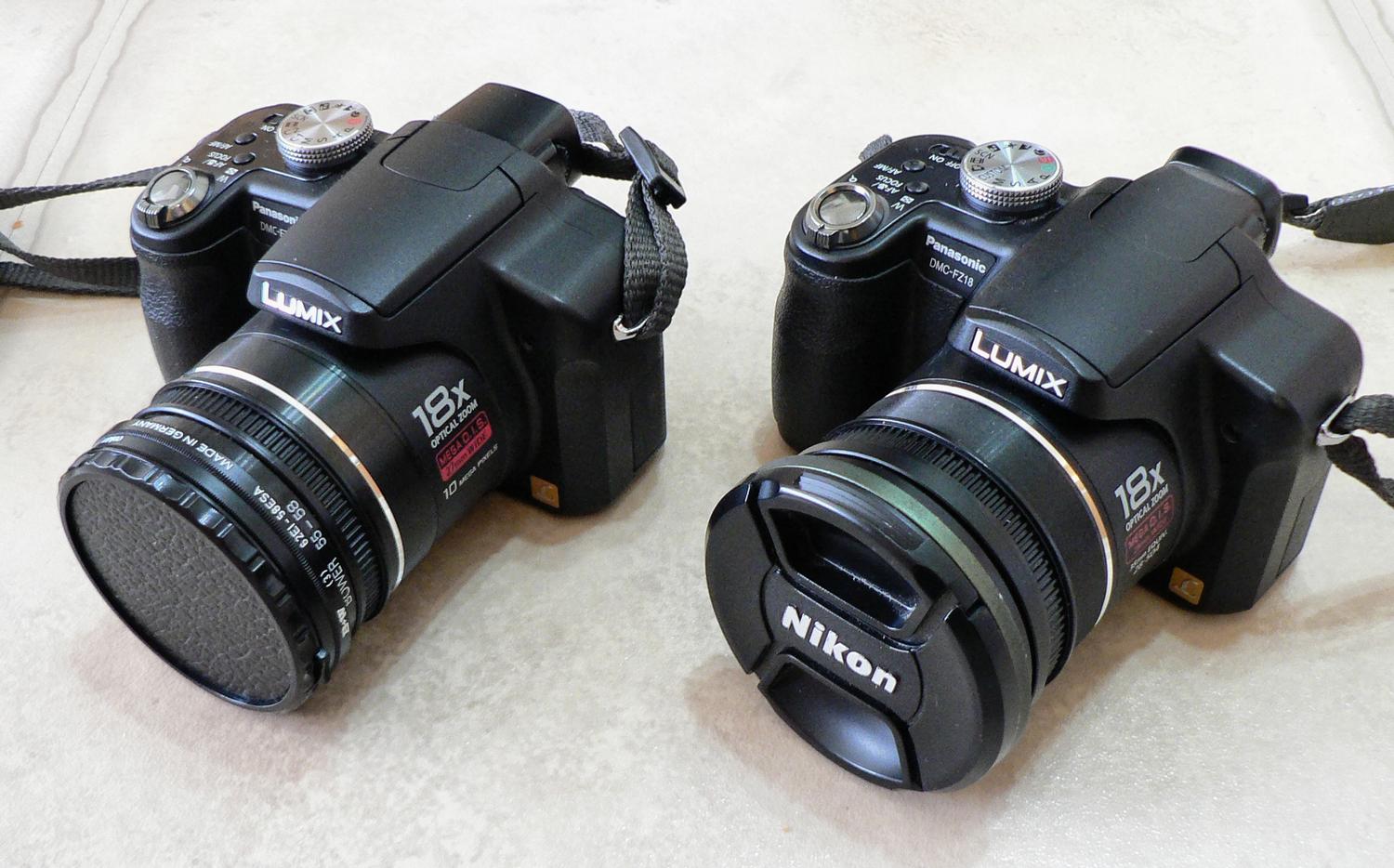
Fifty years ago, I went to California to photograph TV shows for NBC. In 1959, I shot most of the newspaper ads for the fall TV season. What got me this freelance assignment was my use of 35mm cameras and available light shooting. While Life and other magazines were already into this, it was new for NBC, where most of the shots were being done with Rolleiflexes and Speed Graphics, with all the pictures carefully posed and lit. Using 35mm cameras, with their interchangeable lenses, along with high-speed film, I was able to shoot during rehearsals, which gave the pictures a more realistic look.I usually had at least three cameras hanging from me, each with a different focal length lens -- there was no time to switch lenses once the action started. I used both rangefinder and single lens reflex cameras, with lenses ranging from 28mm to 200mm. The multiple cameras, along with their lenses, all made of brass, gave me a gadget bag weighing between fifteen and twenty pounds. This was long before the days of lightweight cameras with plastic bodies and zoom lenses with an 18X range. For some reason, I hung on to those cameras and still have them today, along with other cameras I picked up along the way. Selling them would be like selling an old friend.When I got into digital photography, my first camera was a "superzoom" with a 10X zoom lens. What a revelation. Instead of fumbling with lenses, trying to attach the best one for each situation, I could simply aim the camera and adjust the focal length to suit the scene. Sure, the fancy and expensive DSLRs held out the promise of better image quality, but I had spent enough time fumbling for the right lens and perhaps missing the shot. Now it was possible to carry just one camera and be ready for anything. My collection now includes eight digital cameras, all with fixed zoom lenses.My first Panasonic camera was a DMC-FZ5. Lightweight and sporting a 12X zoom lens, it took incredibly sharp pictures. I carried it everywhere for two years and shot over 14,000 pictures with it. During that time, I was always on the alert for the next "magic" camera. I tried a few, but always ended up going back to my trusty FZ5.In 2007, I bought a Panasonic DMC-FZ18. It was a little bigger and heavier than my FZ5, but it sported an 18X zoom lens, going all the way to 28mm at the widest, and it had a larger sensor with 8 megapixels, compared to the 5 on the FZ5. The pictures were razor-sharp, and the longer zoom range gave me added capabilities. This was one terrific camera. Except for one small problem. The FZ18 is lousy indoors. The image quality is great outdoors, but indoors, as you start to push the ISO higher, the image quality goes straight downhill. The pictures are not only noisy, but it's a really ugly, streaky noise. Plus, it has that annoying yellow blotch thing that sometimes shows up in the shadows and in white areas.Cut to 2008 and there's a new game in town -- the Panasonic DMC-FZ28. I order one as soon as it's available. Although I'm originally put off by its smaller viewfinder, not as good as the FZ18's, I decide to keep it anyway. The big surprise is that the FZ28 is terrific indoors. Shots at 800 ISO are quite useable, and I even try a few at 1600 ISO. Also not too bad. (Read about it here.) And, like the FZ18, it automatically corrects for lens faults like color fringing, and barrel distortion at the wide angle settings. It had the makings of a perfect go-anywhere-shoot-anything camera.But over the next few months, a cruel reality began to set in. As terrific as the FZ28 is, it lacks the critical sharpness of the FZ18. Perhaps it was the new Venus IV processing engine, or it might be the marketing department demanding that the engineers squeeze yet more megapixels into the tiny sensor. But it was still the camera I needed for working indoors.What to do?Being a photographic pack rat, I still had my FZ18. Since I had upgraded to the FZ28, the artist's muse was now using the FZ18. So it was a simple matter to switch back to my old camera and confirm, once and for all what I had suspected -- that the FZ18, under sufficient light, can produce sharper, more detailed images than the FZ28.So the answer was obvious. Just as the DSLR users carry interchangeable lenses so that they will always have one that's the right focal length, I would carry interchangeable cameras, so that I would always have one that's right for the existing light conditions.Think of them as Mr. Indoors (FZ28) and Mr. Outdoors (FZ18). Certainly, they weigh less than a DSLR with multiple lenses. The added benefit is that I always have a spare camera if one should expire. In addition, the two cameras are nearly identical, with similar controls and control layout, identical batteries and memory cards.So when I go out now, I carry one of the cameras and the artist's muse carries the other. That way, we both have a camera to shoot with. And you didn't really think that I was going to schlep the weight of two cameras, did you?I know what you're going to ask. Which camera would I carry if I was going to carry just one? The answer is simple. I'd carry the FZ28. Of the two, it's the better all-around camera. In photography, as in life, there are always compromises.
Copyright 1958-2012 Tony & Marilyn Karp
|
Our new Bookstore!!
Our Art Museum
Visit the Techno-Impressionist Museum
The Artist's Muse Our art books The Artist's Journal Techno-Impressionist Museum Annex Web Site Design
Systems Design
Art and the Zen of System Design
Document Image Retrieval System Bill of Rights Computer System Show Environment Control System The Future
About
Recent Entries
Some thoughts on the Panasonic DMC-FZ150 - Part 2
The Panasonic DMC-FZ150 - A cure for DSLR envy? Some thoughts about my Panasonic DMC-FZ150 - Part 1 The Panasonic DMC-FZ150 -- Best camera ever? Sunglasses - What can you add to a picture? Hey, camera makers. If my smartphone can do this… The Artmuse Variations - a look inside my new book A tribute to George Washington on Veterans Day A visit to the White House The little farmhouse, the tractor, and the interesting tree Buckminster, the baby buckeye butterfly Memories of September 11 Happy Corporation Day! A trip to Monterey and San Francisco The first battle of the American Civil War -- 150 years ago The end of an era -- The last American manned mission Growing an Italian stone pine tree Random thoughts on art and other stuff - From my new book Playing with a classic - Sony DSC-R1 - Part 3, Warrenton Playing with a classic - Sony DSC-R1 - Part 2, In the house Playing with a classic - Sony DSC-R1 - Part 1, Winter Some recent pictures Fixing a Panasonic DMC-FZ18/FZ28/FZ35 problem Into the world of shadows Snowbound! A walk through Warrenton Partly moony with my Panasonic DMC-FZ35 My new Panasonic DMC-FZ35 - Part 3 - Video Some pictures from my Panasonic DMC-FZ35 - Part 2 Happy birthday to muse... Pixels and parking lots -- The Panasonic FZ35 Some pictures from my Panasonic DMC-FZ35 My new Panasonic DMC-FZ35 - Part 2 My new Panasonic DMC-FZ35 - Part 1 On our way to Warrenton Evolution of an Iris A new feature in Adobe Camera Raw 5.4 A tribute to the Apollo 11 astronauts The pole dancer - Variations on a theme Restoring lost highlight detail in JPEG images A short course in photography in ten easy lessons Kodachrome memories A walk in the woods on my birthday Mythbusters - More raw vs JPEG myths Restoring lost shadow detail in JPEG images Action!! Expose for the highlights, develop for the shadows Something new -- Interchangeable cameras Honey, I shrunk the newspaper - The "Nano" NY Times Mistaking evolution for revolution Some pictures from the artist's muse Photography becomes art -- Daibutsu Buddha at Kamakura Happy House-i-versary 25 random things about the artist's muse It happened at the Met Some pictures and some settings - Part 4 - DMC-FZ28 Some pictures and some settings - Part 3 - DMC-FZ28 Some pictures and some settings - Part 2 - DMC-FZ28 Some pictures and some settings - Panasonic DMC-FZ28 Noiseography -- A new photographic technique Shooting infrared with the Panasonic DMC-FZ28 You're never too young One month with the Panasonic DMC-FZ28 A trip to Berryville - Panasonic DMC-FZ28 It's the Hobbitt's birthday On September 11th Shooting Tri-X with the Panasonic DMC-FZ28 A shot in the dark - Panasonic DMC-FZ28 Sunset and the far-up lens -- Panasonic DMC-FZ18 Further musings on the Panasonic DMC-FZ28 Customizing your camera for high-ISO photography Panasonic DMC-FZ28 vs DMC-FZ18 at high ISO Some musings about the Panasonic DMC-FZ28 Hummers, SUVs, DSLRs, and my DMC-FZ28 Panasonic DMC-FZ28 -- At the Flying Circus Panasonic DMC-FZ28 -- The journey begins Farewell, my Panasonic DMC-FZ18 More about the settings for the DMC-FZ18 Dealing with the modes and settings of the DMC-FZ18 Photography becomes art - Bird on a wire The artist's muse at sunset -- DMC-FZ18 Do you need fancy equipment? Now here's my plan Good cookie, bad cookie But seriously, folks... Post-processing Mr. Squirrel A museum of one's own We need new words to describe what's happening Going over to the dark side Shooting the moon Happy Anniversary, Hobbitt The view from my window - DMC-FZ18 My favorite museum A toast to the artist's muse The DMC-FZ18, a sunset, and a glass of beer Remembering Herbert Keppler Shooting abstracts with the Panasonic DMC-FZ18 Fixing a Panasonic DMC-FZ18 problem More pictures from my Panasonic DMC-FZ18 The journey of a thousand Melvins Stairway to the stars -- Extreme post processing DMC-FZ18 - Raw vs JPEG - The JPEG Manifesto Chromatic aberration and the DMC-FZ18 Raw vs JPEG, the DMC-FZ18, and a mystery Some pictures from my Kodak P880 - Part 2 Some pictures from my Panasonic DMC-FZ18 Some pictures from my Kodak P880 - Part 1 DMC-FZ18 - Don't be afraid of the dark Shooting in "Medium" - DMC-FZ18 - The right exposure Shooting in "Medium" and the Panasonic DMC-FZ18 In-use review -- Panasonic DMC-FZ18 - Part 2 In-use review -- Panasonic DMC-FZ18 - Part 1 Photography becomes art - Fantasy at Ida Lee Photography becomes art - The chefs at Little Washington My new old camera - the Kodak Easyshare P880 Photography becomes art - Variations on a theme Doing the impossible - Part 4 - The final result Doing the impossible - Part 3 - The solutions Doing the impossible - Part 2 - The challenges Doing the impossible - Part 1 - The Godfather All the (art) news that's fit to print The museum becomes art - #1 Photography becomes art - Making an angel Some theories about the Sony DSC-H9 How to test a camera Hitting the wall Extreme post-processing - Working with infrared Everything old is new again Some further thoughts on the Sony DSC-H9 Farewell, my DSC-H9 - a mini review Learning to live with the Sony DSC-H9 Possibilities Some thoughts about cameras - The Sony DSC-H9 Blogging 2.0 - A new interface A funny thing happened on my way to the blog In the beginning... |
||