|
Build complex toys and simple tools
by Tony Karp
| |||
|
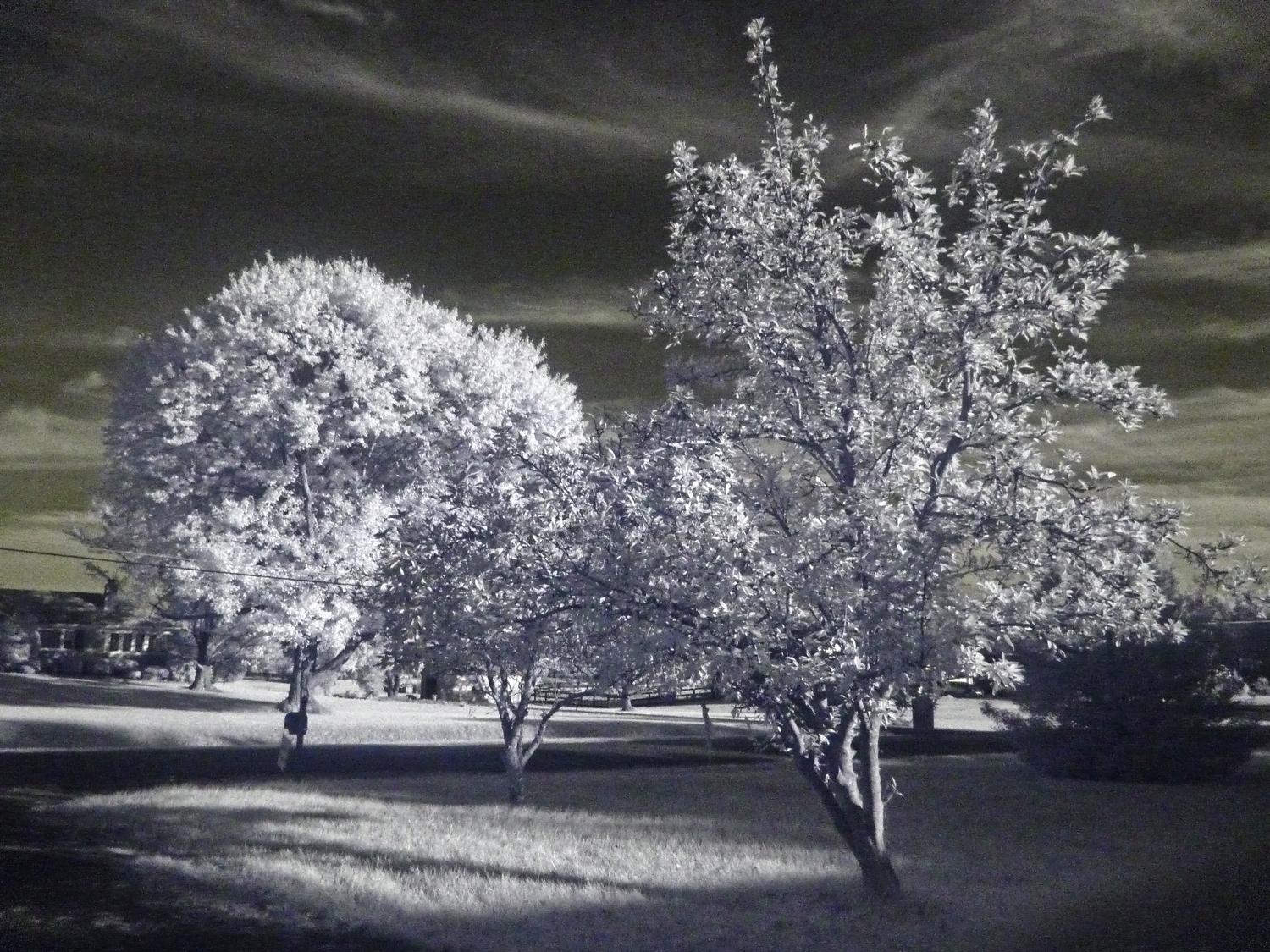
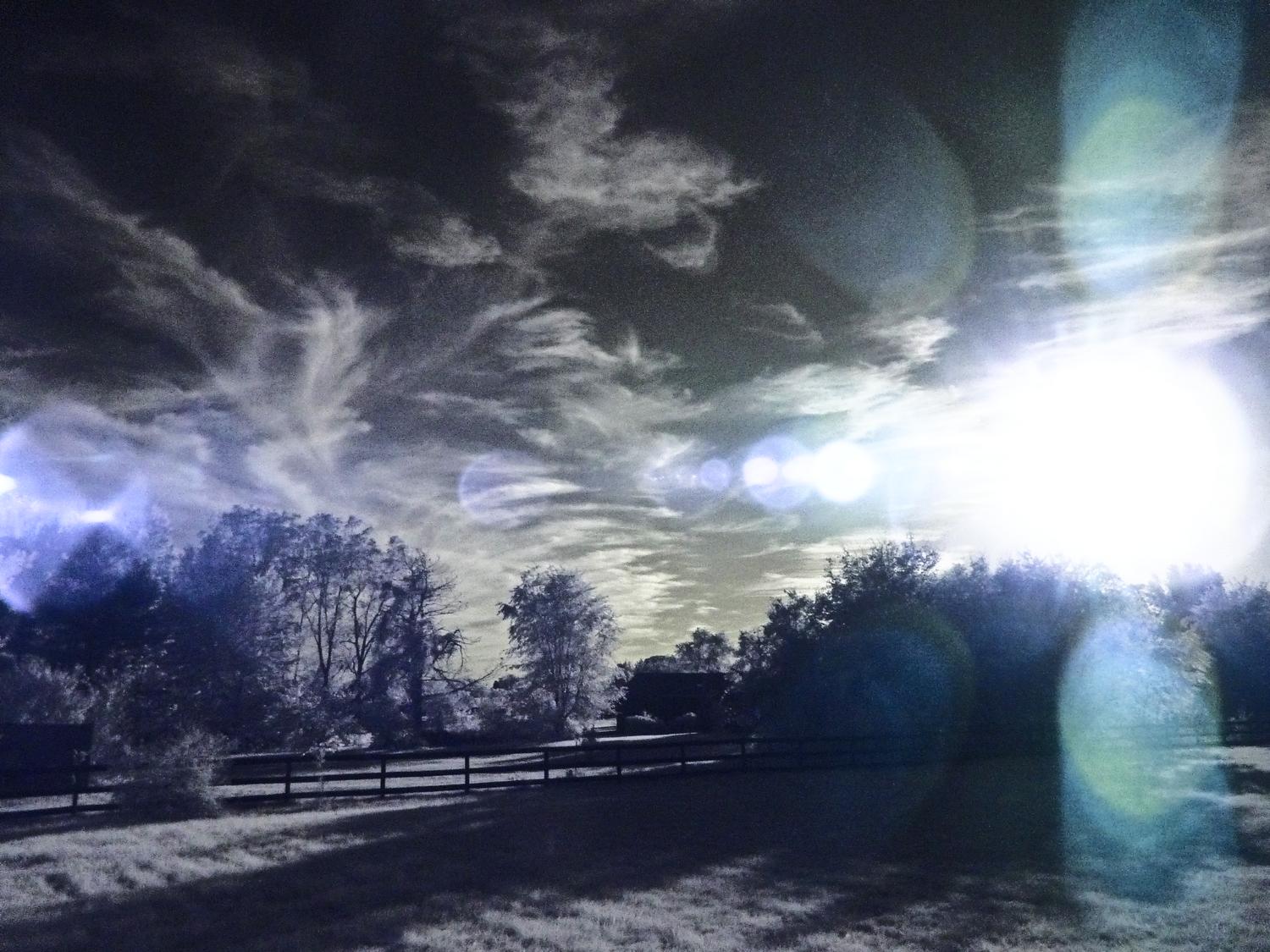
I've received a number of inquiries about the infrared capabilities of the Panasonic DMC-FZ28, prompted no doubt by the inclusion of an infrared panorama in one of my posting of pictures from this camera. Does the FZ28 have infrared capabilities? Yes. And no.Infrared light lies just below the visible spectrum, somewhere between red light and heat radiation. Infrared light is not visible to the naked eye. The image sensors in cameras like the FZ28 are very sensitive to infrared. To fix this, the manufacturers place a filter in front of the sensor that blocks most of the infrared light. To shoot infrared with this type of camera, you have to use a filter (like the Hoya R72) that blocks everything but the infrared. It's easy to see how the combination of the infrared-only filter in front of the lens, combined with the no-infrared filter in front of the camera's sensor leaves you with very little light for taking pictures. At 100 ISO, even in daylight, I had to use a tripod.
Copyright 1957-2023 Tony & Marilyn Karp
|
Web Site Design
Systems Design
The Future
About
Recent Entries
|
||