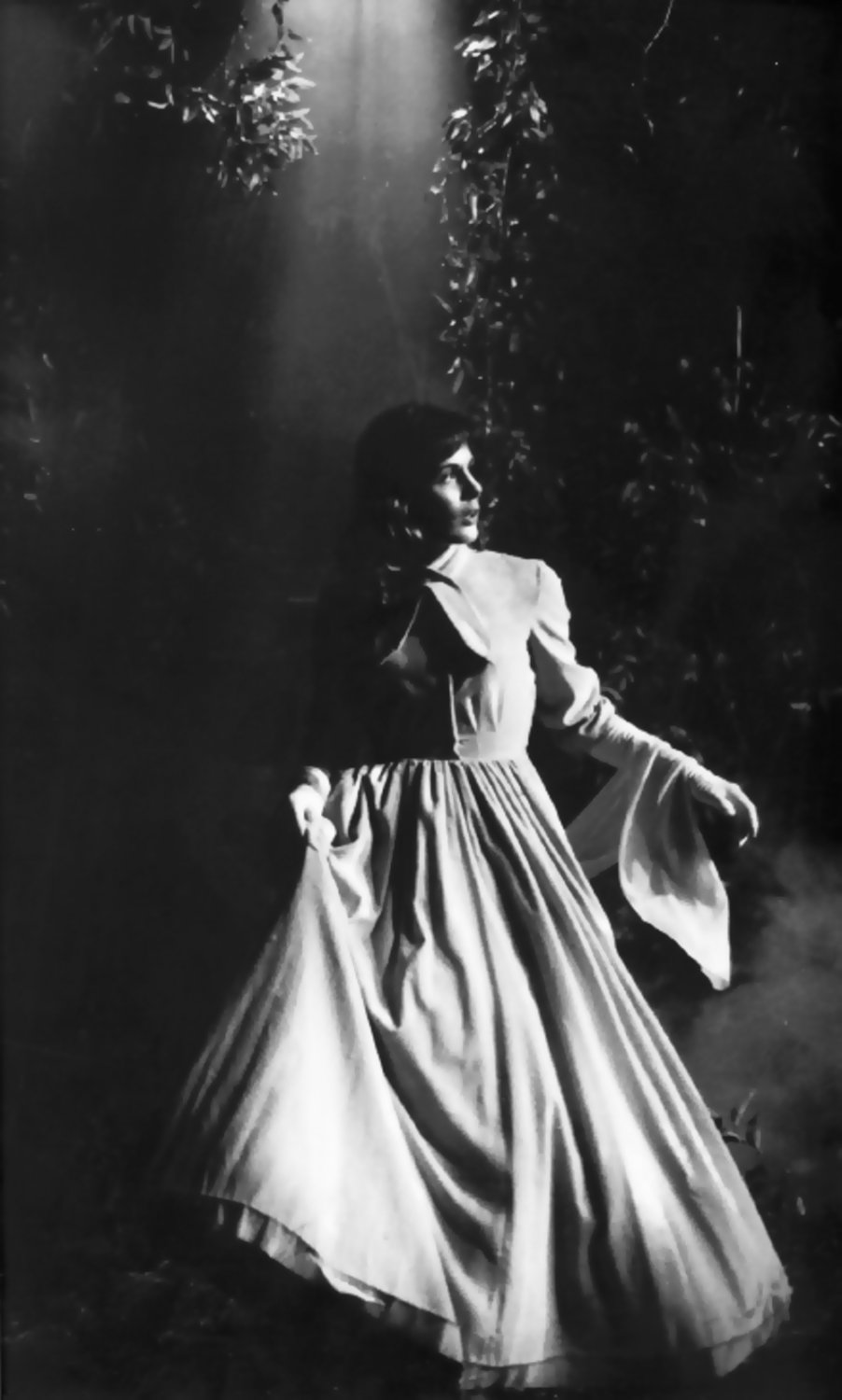
Many years ago (before you were born), photographers practiced something called "available light photography." It started in the 1930s when Dr. Erich Salomon used a small camera called an Ermanox, with glass plates, but sporting an F1.8 lens, to shoot pictures of the dignitaries of his time using just the available light. This allowed him to work unobtrusively, capturing his subjects in a new kind of photographic realism.
Available light photography reached its zenith during the 1950s and the 1960s along with the heyday of magazines like Life and Paris Match. Life magazine is long gone, but Paris Match is still around and still carries great examples of photo reportage.
Available light photographs were the antithesis of everything that photographers hold dear. They were grainy, unsharp -- often blurred, badly lit, with deep shadows and burnt-out highlights. But they delivered a gritty realism that made you feel like an eyewitness to the scene.
What you needed for available light photography way back then was a rangefinder camera (Leica, Nikon, Canon), a fast lens (I had a 50mm F1.4, a 35mm F1.5, and a 100mm F2.0), and a fast black and white film like Tri-X that could be pushed several stops to add additional speed.
When I worked for NBC in California in 1959, most of the other photographers were using Rolleiflexes (2 1/4 x 2 1/4) or Speed Graphics (4 x 5). And there was I, sporting two or three 35mm cameras, on neck straps and shoulder straps. Each camera had a different focal length lens -- usually 35mm, 50mm, and 100mm. For some work, I had a Canonflex R with a 200mm F3.5 lens. (What I would have given for a zoom lens.) The shots I took appeared in TV ads, in newspaper ads, even in Life Magazine. Several ran full page in the New York Times.
Fast forward to the present and what do you find. With the advent of digital cameras, Photoshop, and large-format inkjet printers, the concept of available light photography is a dying art. Digital photography has turned into the ultimate quest for photographic perfection. Bigger image sensors, sharper lenses, examining the minutest details of the photograph, resorting to raw development in the never-ending search for perfection. Almost to the point of forgetting the goal of this exercise.
Suppose you want to try available light photography?
DSLRs, with their larger sensors, supposedly produce better results at higher ISOs, so they should be better for available light photography, right? Maybe not. First of all, the very size of the average DSLR is an impediment, drawing attention to itself. Then there's the nice, solid "clack" you get with every picture. If your goal is the same as Dr. Salomon's, to work unobtrusively, this is hardly the way to go.
What you really need is a small camera that doesn't draw attention, operates silently, has a zoom lens that covers the needed focal lengths, has an image stabilizer system for working at slow shutter speeds, and produces reasonably good results at the higher ISO settings you need for this sort of work.
Until now, there have been a number of small, lightweight super-zoom cameras that could do all of this except for the high ISO requirement. This was due to the small size of their image sensors. Most were okay at 100 ISO, and some produced good results at 200 ISO, but above that, their images deteriorated in a fog of ugly noise that would never be mistaken for the look of film grain. In-camera noise reduction produced smeared results, and even the best noise-reduction software on the computer produced results that were only marginally better. Using raw file format gave only an incremental improvement.
The Panasonic DMC-FZ28 is the first small digital camera that I've owned that produces very good results at higher ISOs. In fact there's a special mode where it gives you up to 6400 ISO at a slightly reduced megapixel size. As such, it fulfills all the requirements for an inexpensive digital camera, well suited for available light photography. I've been playing with this aspect of the camera for about a week, seeking out dark places to take pictures, and the results have been very good.
I had originally intended to include some shots from my DMC-FZ28 to illustrate this article, but it grew rather too long. In the next installment, I'll show some pictures illustrating the various techniques of available light photography with this camera.
Copyright 1957-2023 Tony & Marilyn Karp